Carbon Monoxide Detector Installation in Ohio: What Homeowners Should Know
Many Central Ohio homes burn gas for heat, hot water, or cooking, and many have an attached garage. These can all put carbon monoxide into your living space. Carbon monoxide detector installation is the only way to know when that happens, because you cannot see, smell, or taste the gas. Early fall is the right time to check your coverage, before the furnace starts running every day.
We install hardwired carbon monoxide detectors across Columbus and Central Ohio, usually alongside smoke alarm work. This guide covers where carbon monoxide comes from, where detectors belong, what the Residential Code of Ohio asks for, and how we handle the job.
Where Carbon Monoxide Comes From in an Ohio Home
Carbon monoxide (CO) forms when fuel burns without enough oxygen. A healthy and well maintained appliance will vent it outside. A cracked heat exchanger, a blocked flue, or a backdrafting water heater will send the gas into the house instead.
The common sources we see in Columbus homes:
- Gas furnaces and boilers, especially older units.
- Gas water heaters and their vent pipes.
- Gas ranges and ovens.
- Fireplaces and wood stoves with a blocked chimney.
- Cars left running in an attached garage.
- Portable generators run too close to a door or window during an outage.
The CDC reports that more than 400 people in the U.S. die each year from unintentional carbon monoxide poisoning not linked to fires, and more than 100,000 visit an emergency department. Early symptoms include headache, dizziness, weakness, and an upset stomach. People often mistake them for the flu, which is why a working alarm matters most at night when everyone is asleep.
Hardwired, Plug-In, or Battery: Which Carbon Monoxide Alarm Fits Your Home
You have three basic options for a carbon monoxide alarm.
Battery-only units mount anywhere and cost the least up front. They depend on you replacing batteries, and they do not talk to the other alarms in your house unless they use a wireless interconnect.
Plug-in units sit in a standard outlet, usually with a battery backup. They are easy to move, but outlets near the floor or behind furniture are often poor spots for a detector.
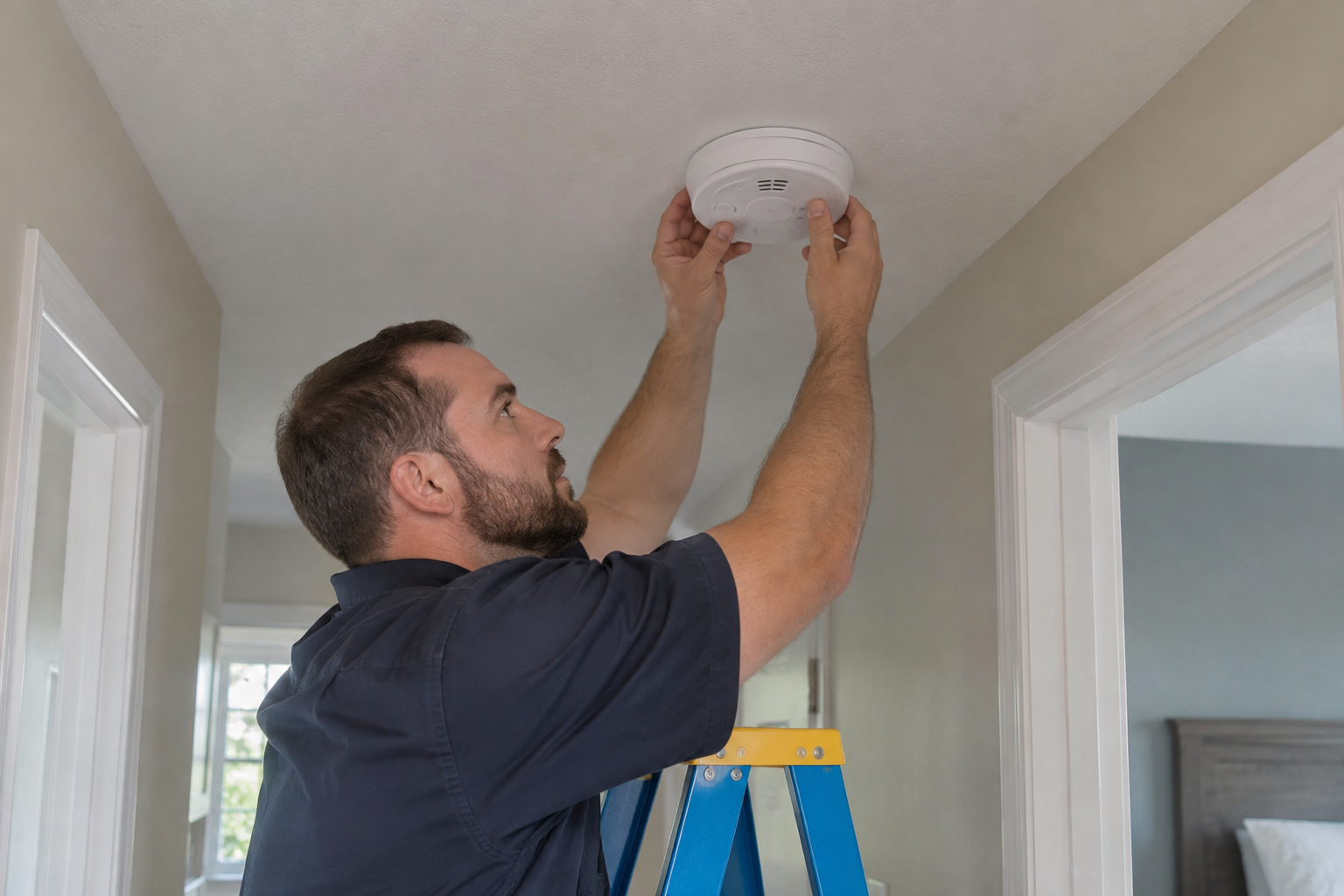
Hardwired units connect to your home’s electrical system and include a battery backup for outages. When they are interconnected, one alarm going off sets off every alarm in the house. You hear a warning from the basement while you sleep upstairs.
Many homeowners pick smoke carbon monoxide combo units. A combo unit covers both hazards from one ceiling spot and uses the same wiring as a standard hardwired smoke alarm. Interconnection usually requires compatible models from the same manufacturer, so we check your existing alarms before we add CO coverage to the system.
Detector Placement: Every Level and Near Sleeping Areas
Detector placement decides whether an alarm wakes you up in time. Ohio’s residential code sets the minimum number of alarms per home, and we add a few spots that are recommended by fire safety groups.
- Install a detector outside each sleeping area, in the hallway near the bedroom doors. Code requires this one.
- Add a detector inside any bedroom that has a fuel-burning appliance in it or in its attached bathroom. Code requires this one too.
- Put at least one detector on every level of the home, including a finished basement.
- Cover the living space next to an attached garage.
Where you place carbon monoxide detectors within a room follows the manufacturer’s instructions. Some models are listed for a ceiling mount, and others belong on the wall. We read the installation guide for the exact unit and mount it where it is listed to work.
Placement also affects false alarms. Keep detectors out of kitchens, bathrooms, and the air right next to a furnace or water heater, where short bursts at startup or high humidity can trigger nuisance alarms. A detector that keeps chirping at nothing often ends up in a drawer, which leaves you with no protection at all.

What Ohio Code Requires
The Residential Code of Ohio requires carbon monoxide alarms in new homes that have a fuel-fired appliance or an attached garage. Each alarm must carry a UL 2034 listing and go in per the manufacturer’s instructions. Combination smoke and CO alarms need both the UL 2034 and UL 217 listings.
If your home has a fuel-fired appliance or an attached garage, a permit for any of these jobs means you need CO alarms in the locations code requires for new homes:
- Adding a bedroom or altering an existing one.
- Altering the area right outside the bedrooms.
- Adding or altering an attached garage.
- Adding, repairing, or replacing a fuel-fired appliance, such as a furnace or water heater.
Pay attention to that last one. A permitted furnace replacement this fall can trigger the CO alarm requirement. We check for it on every permitted job, so your project does not stall at final inspection.
If you rent out a property, local rules and your lease may set their own requirements. Your city or township building department can tell you what applies to your address.
How We Handle Carbon Monoxide Detector Installation
A hardwired installation is electrical work, and we treat it that way. Here is what a typical visit looks like.
Step 1: Our electrician walks the house and notes every fuel-burning appliance, the garage connection, and each sleeping area.
Step 2: Your existing smoke alarms get checked for age, brand, and interconnect compatibility.
Step 3: You see the planned detector placement on every level before any work starts.
Step 4: New cable brings power and the interconnect wire to each new spot. Where existing alarm wiring is in good shape, we connect to it instead.
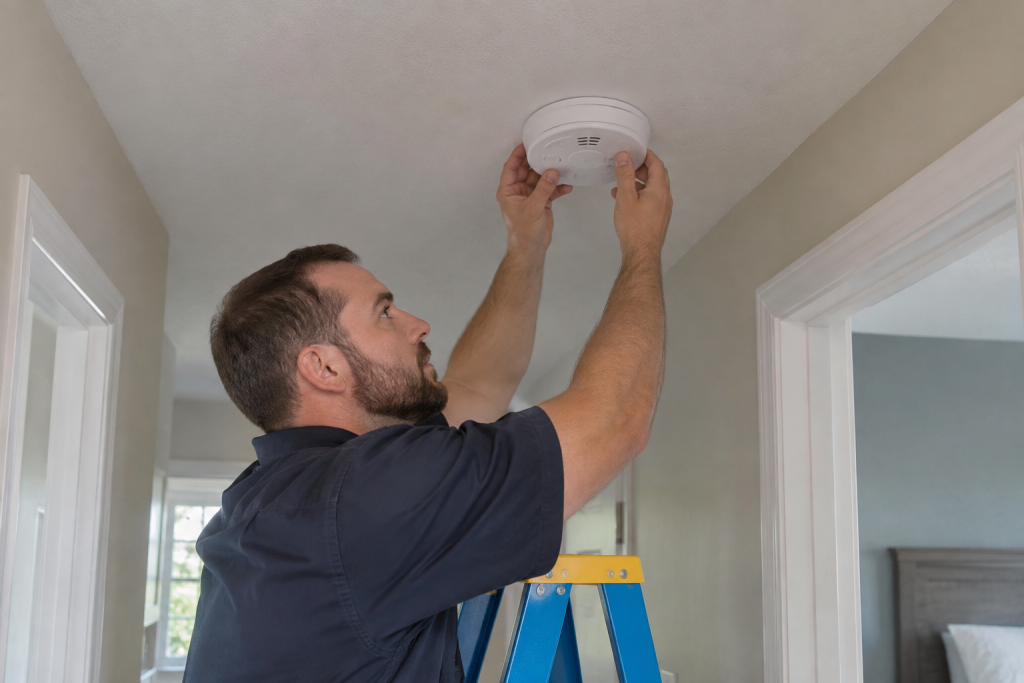
Step 5: Each unit goes up per the manufacturer’s listing, with its battery backup installed.
Step 6: Every alarm gets tested to confirm the whole system sounds together. Then we show you how to test and silence it.
Where the wiring needs a permit, we pull it and handle the inspection. Griggs Electric holds Ohio License 30264 and works out of 1588 Clara St in Columbus. If you are updating your smoke alarms at the same time, see our smoke detector installation guide for more information on how we handle those installations.
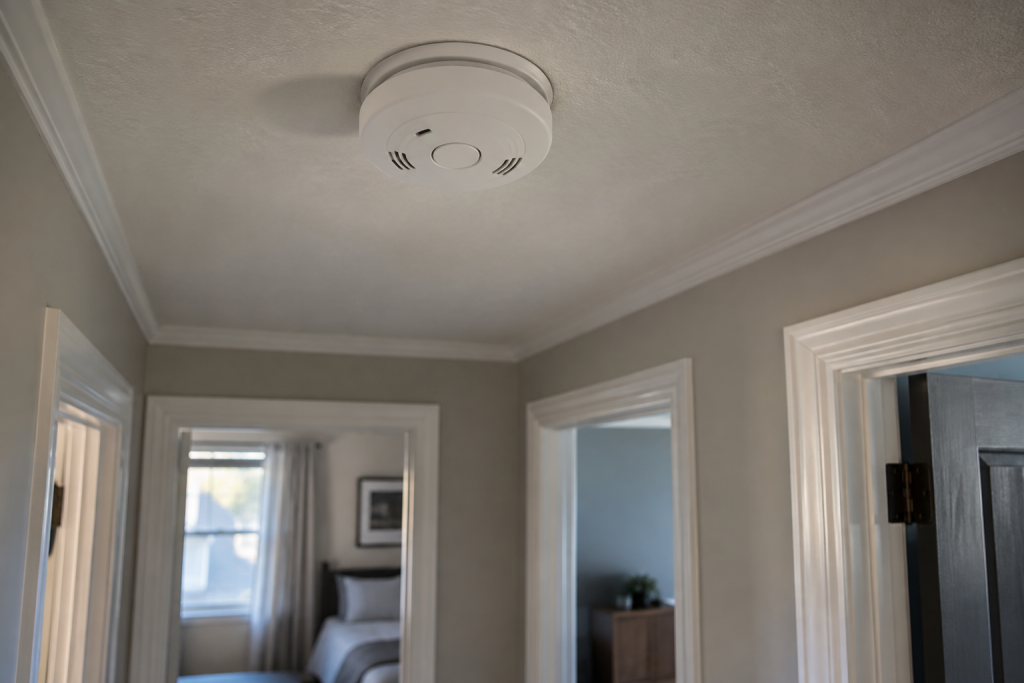
Testing and Replacing Your Monoxide Detectors
Press the test button on each alarm once a month. Replace backup batteries on the schedule the manufacturer lists, or right away if a unit chirps.
CO sensors wear out. Manufacturers rate most monoxide detectors for 5 to 10 years depending on the model. Many detectors will sound an end-of-life signal when they expire. Check the manufacture date on the back of each unit. If yours came with the house and you cannot find a date, plan to replace them to be safe.
If you want a full picture of your home’s wiring while we are there, our electrical safety assessments cover the panel, circuits, and alarms in one visit.
What to Do If Your CO Alarm Goes Off
Treat every alarm as real. Get everyone, including pets, outside into fresh air. Call 911 or your fire department from outside. Do not go back in until responders say the house is safe. Then have a qualified technician inspect the appliance that caused it before you run it again.
Frequently Asked Questions
Where should I install a carbon monoxide detector?
Install one outside each sleeping area, one on every level of the home, and one in any bedroom with a fuel-burning appliance. Mount each unit on the wall or ceiling as its manufacturer specifies.
Do I need a carbon monoxide detector if I have an all-electric home?
Ohio code ties the requirement to fuel-burning appliances and attached garages. If you have an attached garage or a fireplace, you still have a CO source. We recommend coverage in any home with either.
Can a smoke detector also detect carbon monoxide?
A standard smoke alarm does not. A combination smoke and CO alarm does both from one unit. Check the label: it will list both smoke and carbon monoxide.
How long does carbon monoxide detector installation take?
Swapping existing hardwired alarms for combo units usually takes a few hours for a typical house. Running new wiring to spots that have none takes longer, depending on attic and wall access.
Can you connect new CO alarms to my existing smoke alarms?
Often, yes. Interconnection usually requires compatible models from the same manufacturer. If your current alarms are old or from a different brand, replacing the full set is often the cleaner option.
How often should I replace my carbon monoxide detectors?
Most units last 5 to 10 years. Follow the date on the back of the unit and the manufacturer’s guidance, and replace any unit that fails its monthly test.
Do I need a permit to install hardwired CO alarms?
It depends on the scope and your jurisdiction. New wiring often requires an electrical permit. We pull what the local building department requires.
Want to protect your family through heating season? Call us at (614) 837-1688 or get in touch to schedule your carbon monoxide detector installation. You get safe, code compliant alarms that warn everyone in the house at once.