Smoke Detector Installation in Ohio: What Every Homeowner Should Know
Smoke detectors are the most important safety device in your home. They only work if they are in the right spots, wired correctly, and not past their useful life. If your home still runs on standalone battery units stuck to the ceiling, it is time to think about a proper smoke detector installation.
For most Central Ohio homeowners, that means upgrading to hardwired, interconnected smoke alarms. These tie into your home’s wiring and require real electrical work. This guide covers Ohio code requirements, where alarms need to go, why hardwired units are worth the money, and when to call a licensed electrician.
Hardwired vs. Battery-Only: Which Type Do You Need?
Battery-only smoke detectors are what most people picture. A round plastic disc on the ceiling with a 9-volt battery inside. They work, but they have real limits. Batteries die. People pull them out when the low-battery chirp starts at 2 a.m. And each unit sounds only its own alarm. If the one in your basement goes off while you sleep upstairs, you might not hear it.
Hardwired smoke detectors fix these problems. They connect to your home’s electrical system, so there is no battery to go dead as the main power source. They still have a backup battery for outages. The big advantage is interconnection: when one alarm detects smoke, every alarm in the house goes off at once. That is the difference between waking up in time and not.
Hardwired, interconnected smoke alarms are required in new construction under the codes Ohio has adopted. Older homes are often grandfathered in. That does not mean the old setup is safe — it just means no one has required the upgrade yet.
Where to Install Smoke Detectors in Your Home

Placement is not optional. Ohio follows national fire safety standards that lay out where smoke alarms must go. The rules come from decades of fire data:
- Inside each bedroom. Every sleeping room gets its own detector on the ceiling or high on the wall.
- Outside each sleeping area. If bedrooms share a hallway, that hallway needs one too.
- On every level of the home. That includes the basement, finished or not, and any usable attic space.
- Near the kitchen, but not in it. Units too close to the stove cause false alarms. NFPA 72 keeps smoke alarms at least 10 feet from a cooking appliance; between 6 and 10 feet, a photoelectric alarm or one with an alarm-silencing switch is the way to cut nuisance trips.
In a typical Central Ohio two-story with three bedrooms and a basement, that is at least six smoke alarms. Some layouts need more. Units placed when the home was built may have been code-compliant then but could be in the wrong spots by today’s standards. And the detectors themselves are likely past their service life.
Ionization, Photoelectric, and Dual-Sensor Detectors
Not all detectors sense smoke the same way.
Ionization detectors react fast to flaming fires with open flames and thin smoke. They are the most common type in older homes. They are also the type most likely to false-alarm from cooking or shower steam, which leads people to take them down.
Photoelectric detectors catch slow, smoldering fires better. These fires fill a room with thick smoke before flames show up. They cause a large share of fire deaths because they often start while people sleep. Photoelectric units are less prone to cooking-related false alarms.
Dual-sensor detectors combine both in one unit. Fire safety groups have long recommended using both types in the home. Dual-sensor models are the simplest way to do that.
When you plan a smoke detector installation, the type of sensor is a real choice. Talk to your electrician rather than grabbing whatever is on the shelf. Different rooms benefit from different sensing technology.
Carbon Monoxide Detectors: The Other Half of Home Safety

The Residential Code of Ohio requires carbon monoxide alarms in new homes, and in existing homes with fuel-burning appliances when permitted alteration or repair work is done. A gas furnace, gas water heater, gas range, fireplace, wood stove, or attached garage all put a home in that category. Most Central Ohio homes heat with natural gas, so even where no rule forces the upgrade today, CO coverage belongs on the list.
Carbon monoxide is odorless and invisible. The only way to detect it is with a CO alarm or a combination smoke/CO unit. Combo units work well in hardwired setups. They cut the total number of ceiling devices while covering both hazards.
CO detectors go on every level and near sleeping areas, much like smoke alarms. Do not place them right next to furnaces or water heaters, where normal startup output can cause false readings.
If you already need installation of smoke detector units or need to replace old ones, adding CO coverage at the same time saves money. The wiring runs are the same, and combo units mount in the same spots.
When to Replace Smoke Detectors
These devices do not last forever. The sensors wear out, and a unit on your ceiling for 15 years is not doing the job it once did.
Here is the general timeline:
- Smoke alarms: Replace after 10 years from the manufacture date, not the install date. The date is printed on the back of the unit.
- CO detectors: Replace after 5 to 7 years. CO sensors wear out faster than smoke sensors.
- Combo smoke/CO units: Go by the shorter number, usually 7 years.
If you cannot find a date on your units, or they came with a home built before 2010, they are overdue. If you press the test button and nothing happens or the sound is weak, replace them right away, no matter the age.
Why Smoke Detector Installation Is Electrical Work
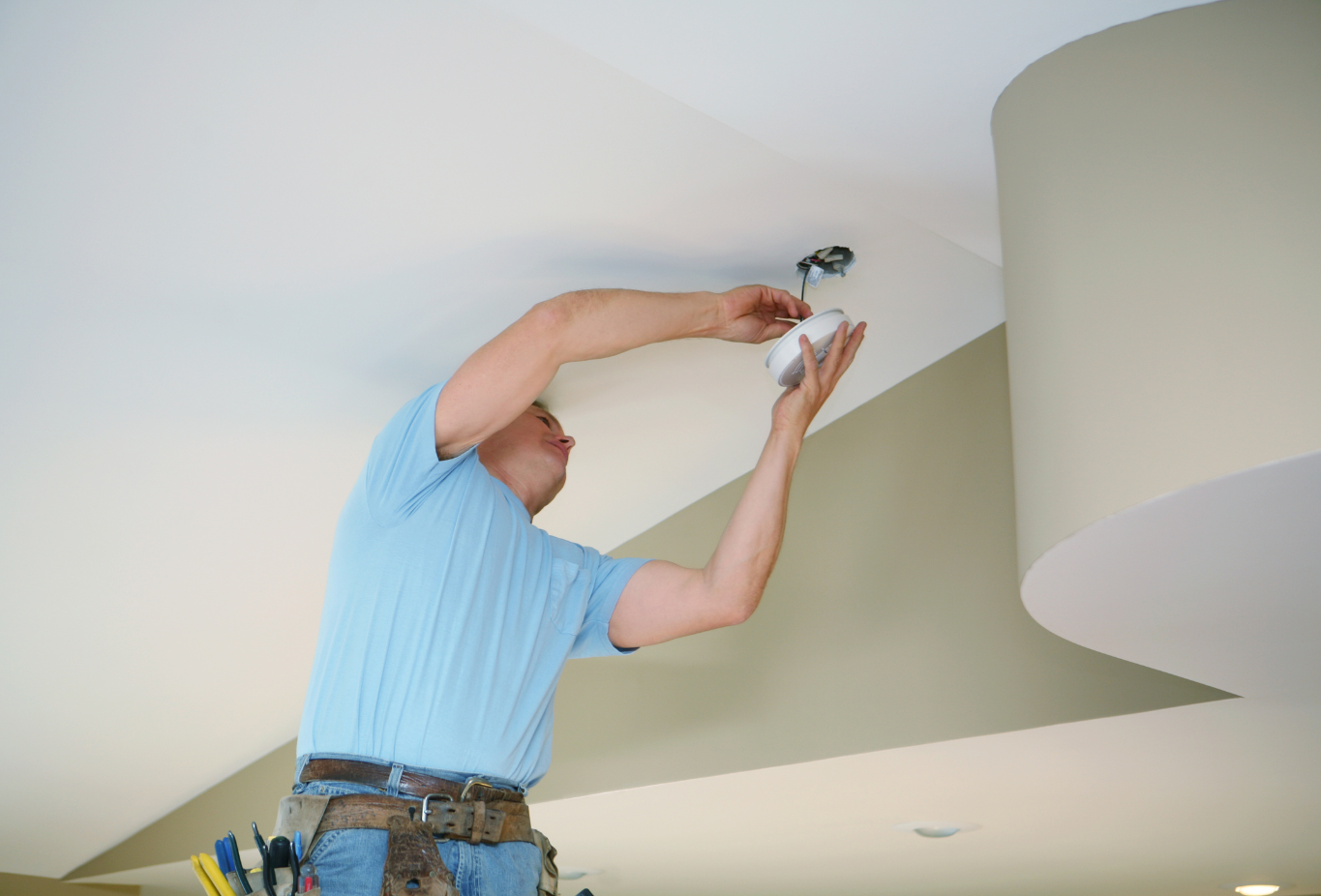
Putting up a battery-powered unit is a homeowner task. A wired smoke detector installation — running new circuits for hardwired, interconnected alarms — is real electrical work. That wiring is where the labor goes.
Smoke detector installation cost depends mostly on this electrical scope. Here is what it looks like in a typical upgrade:
- New circuits or circuit extensions to reach each detector spot. Older homes often have no wiring in the right places.
- Interconnect wiring. Each hardwired alarm needs a dedicated third conductor so all units talk to each other. One triggers, they all sound.
- Ceiling box and mounting bracket work. Hardwired detectors mount to electrical boxes with a proper mounting bracket and screw anchors into the framing — not adhesive or drywall screws.
- Attic and crawlspace routing. In existing homes, the electrician will mark drill points, drill holes through top plates, fish cable through finished walls, and route runs without damaging the home. It takes skill to do cleanly.
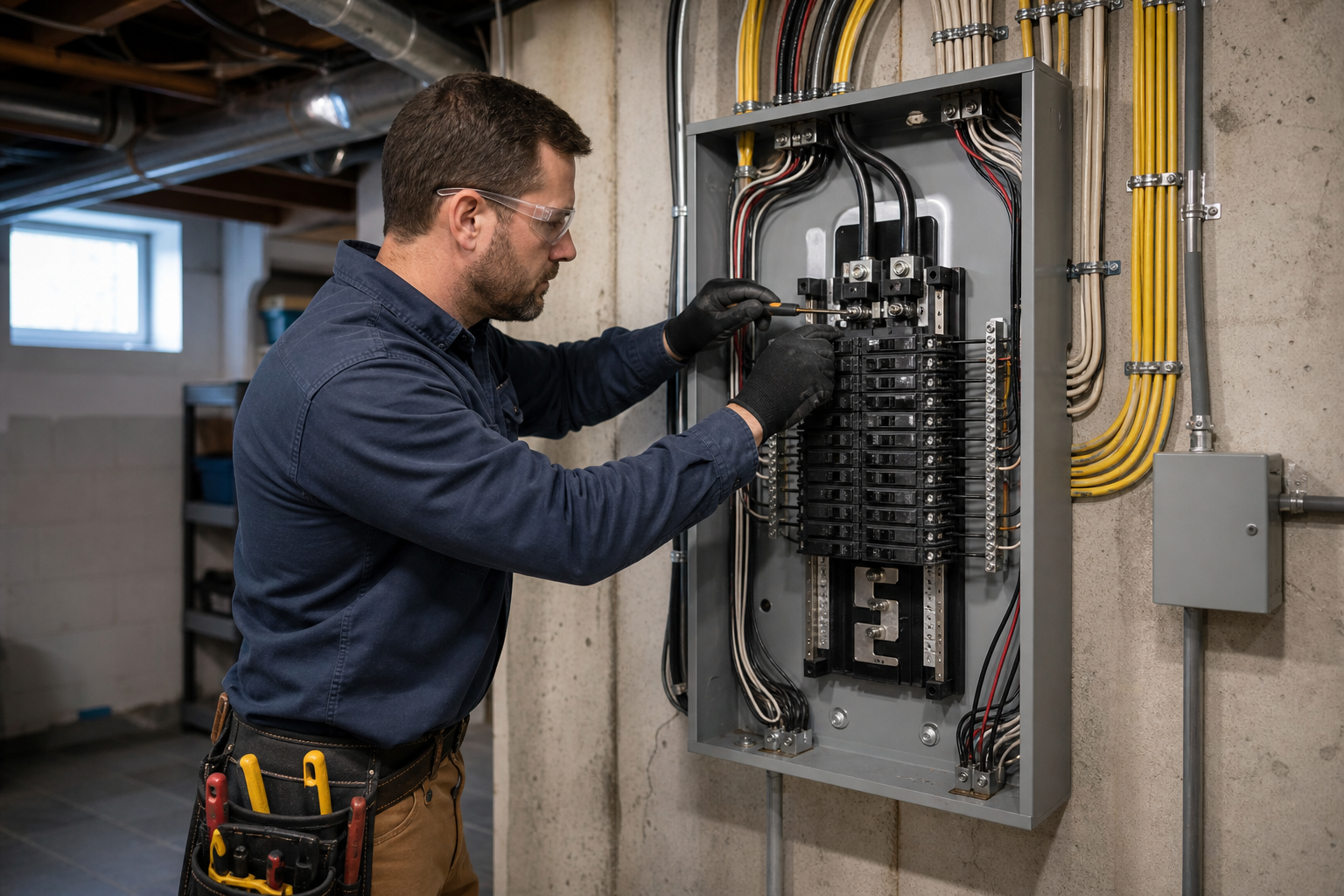
- Panel connections. The new circuit ties into your electrical panel with the right breaker protection.
In new builds, this is simple because the walls are open. In an existing Ohio home — especially the 1950s–1980s housing stock across Central Ohio — it is a real project. An electrician who has done dozens of these knows how to route wire without tearing up your home.
Get Your Home’s Smoke Detection Right
Smoke detector installation is easy to put off. What you have seems to work. But “seems to work” and “will protect your family at 3 a.m.” are two different things. Old sensors, missing rooms, standalone units that cannot alert the whole house — these gaps matter when it counts.
Griggs Electric is a licensed electrical contractor in Columbus, Ohio, serving homes across Central Ohio. Our smoke detector installation services cover hardwired smoke and CO work in new and existing homes — wiring, interconnection, and code-compliant placement, done right.
Call Griggs Electric at (614) 837-1688 to schedule a smoke and CO detection assessment, or reach out through our contact page. Upgrading your home’s electrical safety is one of the fastest ways to protect what matters most.