Whole House Generator Installation in Ohio: A Homeowner’s Complete Guide
Ohio homeowners know the drill. A summer derecho, an ice storm in January, or a car into a utility pole down the road, and suddenly the whole street is dark. Whole house generator installation is the one upgrade that turns those outages from an emergency into an inconvenience — the lights stay on, the sump pump keeps running, and the food in your refrigerator survives. If you have been thinking about a standby generator, late summer is the smart time to act: you get ahead of fall storm season and the winter rush, when lead times on equipment and installers stretch out.
This guide walks through how whole house generator installation actually works in Central Ohio — what size you need, how transfer switches work, what fuel makes sense, what the permit and inspection process looks like, and what drives the cost.
Portable vs. Standby: What “Whole House” Really Means
A portable generator is a machine you roll out of the garage, fuel by hand, and plug a few extension cords into. It can keep a refrigerator and a couple of lamps alive. It cannot run your furnace blower, well pump, or central air, and running one indoors or in a garage is a carbon monoxide risk every single time.
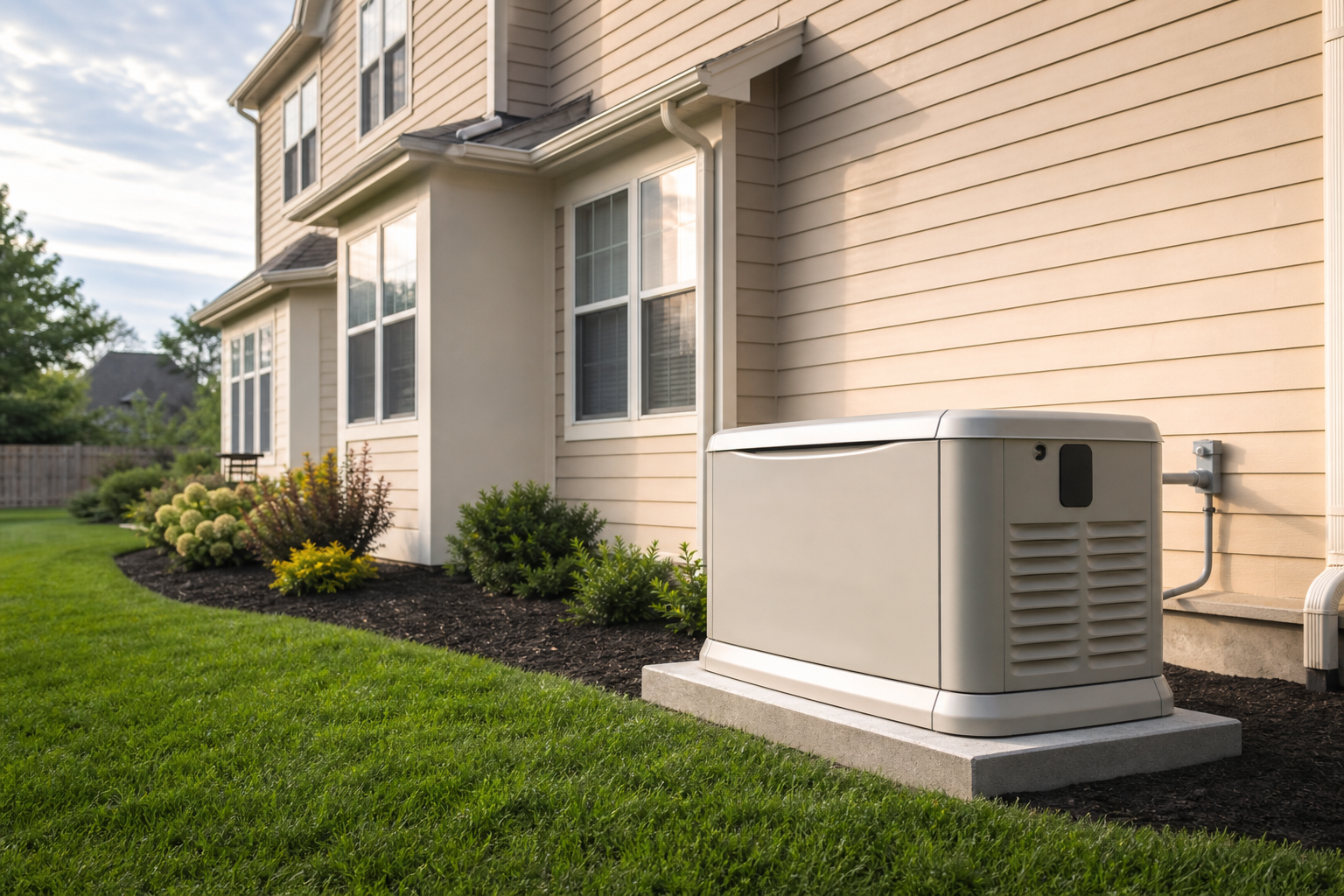
A whole house generator — also called a permanently installed standby generator — is a different animal. It sits outside on a pad like a central air condenser, is permanently wired into your electrical system, and is connected to natural gas or propane. When the utility power drops, it starts automatically, usually within seconds, and it powers the circuits it was sized for without anyone touching a cord. When utility power returns, it shuts itself back down.
If your goal is “I want my house to just keep working,” that means a standby unit — and it means licensed electrical work, because you are creating a second source of power for your home.
Sizing: The Decision That Determines Everything Else
Sizing is where whole house generator installation goes right or wrong. Undersize the unit and it will overload and shut down the first time your air conditioner and well pump start together. Oversize it and you paid for capacity and fuel consumption you will never use.
Sizing starts with a load calculation, not a guess. An electrician looks at:
- Hard-starting motor loads. Air conditioning compressors, well pumps, and septic pumps draw a large surge at startup. These often set the minimum size.
- Electric heat. Electric furnaces, heat pump backup strips, and electric water heaters are enormous loads. A home with electric heat needs a much larger unit than an identical home with a gas furnace.
- Kitchen and laundry. Electric range, oven, and dryer.
- Must-run essentials. Furnace blower, sump pump, refrigerator, freezer, well pump, medical equipment, internet and networking gear.
You then have two paths. A whole-home approach sizes the generator to carry essentially everything at once. A managed-load approach uses a smaller generator plus load-management devices or a dedicated subpanel, so the generator sheds or stages big loads instead of trying to run them simultaneously. Managed load is often the better value in an Ohio home with gas heat — you cover everything that matters for meaningfully less money.
Transfer Switches, Explained
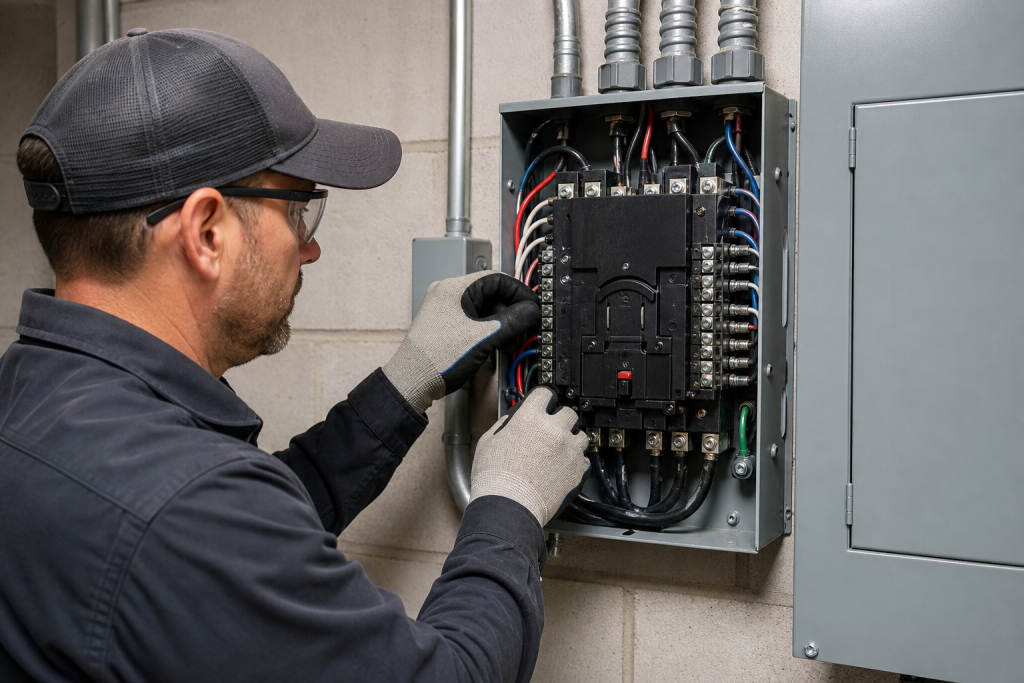
The transfer switch is the safety heart of the system. It guarantees that your house is connected to either the utility or the generator, never both. Without it, your generator could backfeed electricity onto utility lines and endanger the line crew working to restore your power. This is not optional, and it is the main reason this work is not a DIY project.
- Automatic transfer switch (ATS). Senses the outage, starts the generator, and switches your home over with no one home to do anything. This is standard on whole house generator installation.
- Service-rated ATS. Installed at the meter and service entrance, transferring the entire panel.
- Essential-circuits switch or subpanel. Transfers a selected group of circuits — a common, cost-effective setup paired with a mid-size generator.
Whichever configuration you choose, the switch has to be matched to your service size and your panel, which is why generator work and panel work often go together. If your existing panel is undersized, crowded, or an older problem brand, that gets addressed as part of the project.
Fuel: Natural Gas or Propane in Central Ohio
Most Columbus-area homes with gas service go with natural gas. There is no tank to refill and no fuel to run out of during a multi-day outage, which is the single biggest advantage over portable units. The catch is capacity: a standby generator is a significant new gas appliance, and the existing gas piping and meter may not be able to deliver enough volume alongside your furnace and water heater. That has to be verified before installation, not after.
If you are on a rural line outside the gas footprint — plenty of Licking, Fairfield, and Pickaway county properties are — propane is the answer, with a tank sized to your expected runtime. Propane stores well and burns clean; you just have to keep an eye on the tank level and set up an automatic delivery arrangement.
Diesel standby units exist but are mostly a commercial choice, where fuel storage and noise are less of a concern.
Permits, Code, and Inspection
Ohio residential electrical work follows the Residential Code of Ohio, which adopts the National Electrical Code, and standby generators fall under the NEC’s optional standby systems requirements. Local jurisdictions across Central Ohio administer permitting and inspection, so requirements vary between Columbus, Franklin County, and the surrounding townships and municipalities.
What a compliant whole house generator installation involves in practice:
- Electrical permit and inspection for the generator circuit, transfer switch, and any panel work
- Gas permit and inspection for the fuel piping, often a separate trade and separate inspection
- Correct placement — clearances from windows, doors, vents, and the structure so exhaust cannot enter the home, plus manufacturer-specified clearance for airflow and service access
- Proper grounding and bonding at the generator and transfer switch
- A level, code-compliant pad and appropriate wiring methods for outdoor and underground runs
Skipping permits is a bad trade. It can create problems at resale, complicate an insurance claim after a fire or CO incident, and there is no independent check that the interlock protecting your neighborhood’s line crew was installed correctly.
What Drives the Cost
There is no honest flat price for whole house generator installation, because two homes on the same street can differ by thousands. The real cost drivers are:
- Generator size, which comes out of the load calculation
- Transfer switch type — whole-service versus essential-circuits
- Panel condition — whether a panel upgrade or new subpanel is needed
- Distance and routing from the generator pad to the panel and the gas connection
- Gas supply work — meter or piping upgrades, or a new propane tank and line
- Site conditions — pad construction, trenching, landscaping, and access
- Permits and inspections in your jurisdiction
The way to get a real number is an on-site evaluation. Any quote given over the phone without someone looking at your panel, your gas meter, and your proposed generator location is a guess.
Maintenance: Plan for It Up Front
A standby generator is a small engine that sits outside and is expected to start on the worst night of the year. It needs upkeep to do that:
- Let the weekly or monthly self-test exercise cycle run — that is the unit proving it still starts
- Oil, filter, spark plug, and air filter service on the manufacturer’s schedule
- Battery replacement — a dead starting battery is the most common reason a standby unit fails to start
- Keep the enclosure clear of leaves, snow, and mulch so it can breathe
- Have the transfer switch and connections inspected periodically
Ask about a maintenance plan when you get your quote, not two years later.
Get an Honest Assessment for Your Home
Whole house generator installation is one of the higher-ticket electrical projects a homeowner takes on, and it is worth doing right the first time: correct sizing, a properly installed transfer switch, verified fuel capacity, and permitted, inspected work.
Griggs Electric is a licensed electrical contractor based in Columbus, Ohio, serving homeowners across Central Ohio. We will do the load calculation, walk your site, confirm your gas supply can carry the unit, and give you a straight recommendation — including telling you when a managed-load setup will serve you better than the biggest generator on the truck.
Call Griggs Electric at (614) 837-1688 to schedule a whole house generator consultation, or reach out through our contact page. Getting on the schedule now means you are ready before the first ice storm — not calling from a dark house afterward.