
Ceiling Fan Installation in Ohio: A Complete Homeowner’s Guide
Few upgrades deliver as much comfort per dollar as a ceiling fan. During an Ohio summer — where humidity can make 85°F feel closer to 100 — a properly installed ceiling fan can make a room feel up to 10 degrees cooler without touching your thermostat. In winter, reversing the blade direction pushes warm air back down from the ceiling, reducing heating costs during those long Central Ohio cold snaps.
But ceiling fan installation is not the simple weekend project that big-box stores make it look like. Depending on your home’s wiring, ceiling structure, and the fan you choose, the job can involve new circuits, fan-rated electrical boxes, and work inside your walls. Here is everything Ohio homeowners need to know before scheduling a ceiling fan installation.
Replacement vs. New Ceiling Fan Installation
The scope — and the cost — of your project depends on one question: is there already a ceiling fan or light fixture where you want the fan?
Replacement installation means swapping an existing fan or light for a new ceiling fan. If the wiring and an appropriately rated electrical box are already in place, this is a straightforward job that a licensed electrician can typically complete in under an hour.
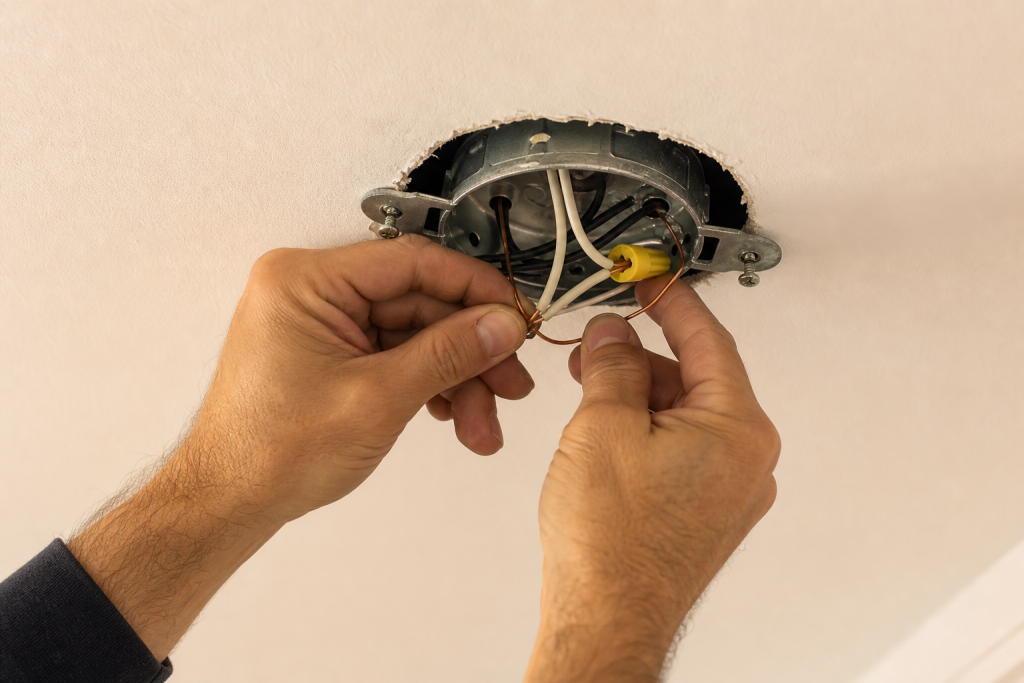
New installation is a different story. When there is no existing fixture — say you want a fan over your bed or in a sunroom addition — the electrician needs to run new wiring from your electrical panel or a nearby junction box, cut into the ceiling, install a fan-rated box, and often patch drywall afterward. This work takes longer and costs more, but it is the only safe way to add a fan where one has never been.
No matter which scenario applies, the electrical box is the critical safety component. A standard light fixture box is rated to hold about 50 pounds of static weight. A ceiling fan in operation creates dynamic force — a wobbling, unbalanced fan can exert several times its own weight on the mounting hardware. That is why building code requires a fan-rated box, which is tested to handle both the weight and the motion. Skipping this step is one of the most common — and most dangerous — DIY mistakes.
How Much Does Ceiling Fan Installation Cost in Ohio?
Ohio homeowners can expect the following price ranges in 2026:
- Replacement on existing wiring: $80–$200 per fan
- New installation with wiring: $300–$750 or more
- Vaulted or high-ceiling surcharge: $150–$400 additional, depending on ceiling height and accessibility
Several factors influence the final number:
- Ceiling height and type. Standard 8- to 9-foot flat ceilings are the simplest and least expensive. Vaulted ceilings, cathedral ceilings, and two-story foyers require special mounting hardware, extension rods, and sometimes scaffolding.
- Wiring condition. Older Ohio homes — especially those built before the 1970s — may have aluminum wiring or outdated circuits that need attention before a fan can be safely connected.
- Number of fans. Installing several fans at once usually reduces the per-unit cost, since the electrician is already on-site with tools and materials.
- Fan features. Fans with integrated lighting, remote controls, or smart-home connectivity may need additional wiring or switch configurations.
A licensed electrician will assess your ceiling and wiring during an on-site estimate and give you a firm price before any work starts.
Why You Should Hire a Licensed Electrician
You might be wondering whether you really need an electrician, or whether this is a job you could handle on a Saturday afternoon. Here is the honest answer: replacing a fan where one already exists and where the wiring and box are confirmed safe is within reach for a confident DIYer. But most homeowners cannot verify those conditions without opening up the ceiling — and if you find aluminum wiring, a non-rated box, or an overloaded circuit, the project just became an electrical job.
For new installations, there is no gray area. Running new wiring through walls and ceilings, tapping into circuits, and ensuring everything meets the National Electrical Code requires a licensed professional. Ohio law requires electrical permits for new circuit work, and unpermitted electrical modifications can create liability issues when you sell your home.
Beyond code and permits, there is the safety factor. The U.S. Consumer Product Safety Commission reports thousands of ceiling fan-related incidents each year, many of which trace back to improper installation — loose wiring connections, incorrect box ratings, or fans mounted to drywall anchors instead of structural framing.
Hiring a licensed electrician eliminates these risks and gives you the confidence that your fan is installed safely, performs efficiently, and meets all applicable codes.
Choosing the Right Ceiling Fan for Your Space
Before calling your electrician, a few decisions about the fan itself will make the installation smoother:
Fan size by room size:
- Rooms up to 75 sq ft (bathrooms, small bedrooms): 29–36 inch fan
- Rooms 76–144 sq ft (bedrooms, kitchens): 36–42 inch fan
- Rooms 144–225 sq ft (living rooms, master bedrooms): 44–50 inch fan
- Rooms 225–400 sq ft (great rooms, open floor plans): 50–54 inch fan
- Rooms over 400 sq ft: consider two fans or a fan 60 inches or larger
Mounting type:
- Standard mount works for ceilings 8–9 feet. Blade tips should be at least 7 feet above the floor and 18 inches from the nearest wall.
- Flush mount (hugger) is designed for ceilings under 8 feet where a downrod would bring the blades too low.
- Extended downrod is necessary for vaulted or high ceilings to bring the fan down to an effective height.
Outdoor-rated fans are required for covered porches, patios, and screened-in rooms. Ohio’s humidity and temperature swings mean you need a fan rated for damp or wet locations — standard indoor fans will corrode and fail.
Your electrician can confirm whether your chosen fan is compatible with your ceiling structure and existing wiring before installation day.
Energy Savings That Add Up
A ceiling fan uses roughly 15–90 watts depending on speed and size — far less than an air conditioning system that draws 2,000–5,000 watts. The Department of Energy estimates that using ceiling fans with your AC allows you to raise the thermostat by 4°F without any reduction in comfort, which can cut cooling costs by as much as 30 percent over a full summer.
For Ohio homeowners running central air from June through September, that can translate to real savings. A home with three or four strategically placed ceiling fans can significantly offset air conditioning costs, especially during July and August when electricity rates are at their peak.
In winter, switching the fan to clockwise rotation at low speed creates an updraft that circulates trapped warm air near the ceiling back down into the living space. This is particularly helpful in Ohio homes with high ceilings or open floor plans where heat tends to rise and stay out of reach.
The bottom line: ceiling fans are one of the most cost-effective comfort upgrades available, and they pay for themselves in energy savings within a few seasons.
When to Schedule Your Ceiling Fan Installation

Summer is the busiest season for ceiling fan installation in Central Ohio, and for good reason — no one wants to wait until the first heat wave to realize they need better air circulation. If you are thinking about adding fans to your home, the best time to schedule is now, before the peak of summer demand.
Here are a few situations where a ceiling fan installation makes the most sense:
- You are relying too heavily on AC. Fans and air conditioning work best together, not as replacements for each other.
- A room feels stuffy or stagnant. Bedrooms, home offices, and bonus rooms often lack the airflow that main living areas get from HVAC vents.
- You recently finished a basement or addition. New living space needs proper air circulation from day one.
- Your existing fans wobble, make noise, or look dated. Older fans may also lack energy-efficient motors and modern features.
- You are planning to sell your home. Ceiling fans are consistently rated as one of the most desirable features by Ohio homebuyers.
Get a Free Ceiling Fan Installation Estimate from Griggs Electric
At Griggs Electric, we handle ceiling fan installations across Central Ohio every week — from simple swaps in ranch-style homes to multi-fan new installations in two-story custom builds. Every job gets the same treatment: a thorough assessment of your ceiling and wiring, a clear upfront price, and professional installation that meets code.
We are a locally owned electrical contractor based in Brice, Ohio, and we have been serving Central Ohio homeowners and businesses with reliable, licensed electrical work. Whether you need one fan installed in a bedroom or want to outfit your entire home, we would be happy to take a look and give you an honest estimate.
Call Griggs Electric at (614) 837-1688 or request a free estimate online to get your ceiling fan installation scheduled before the summer rush.